

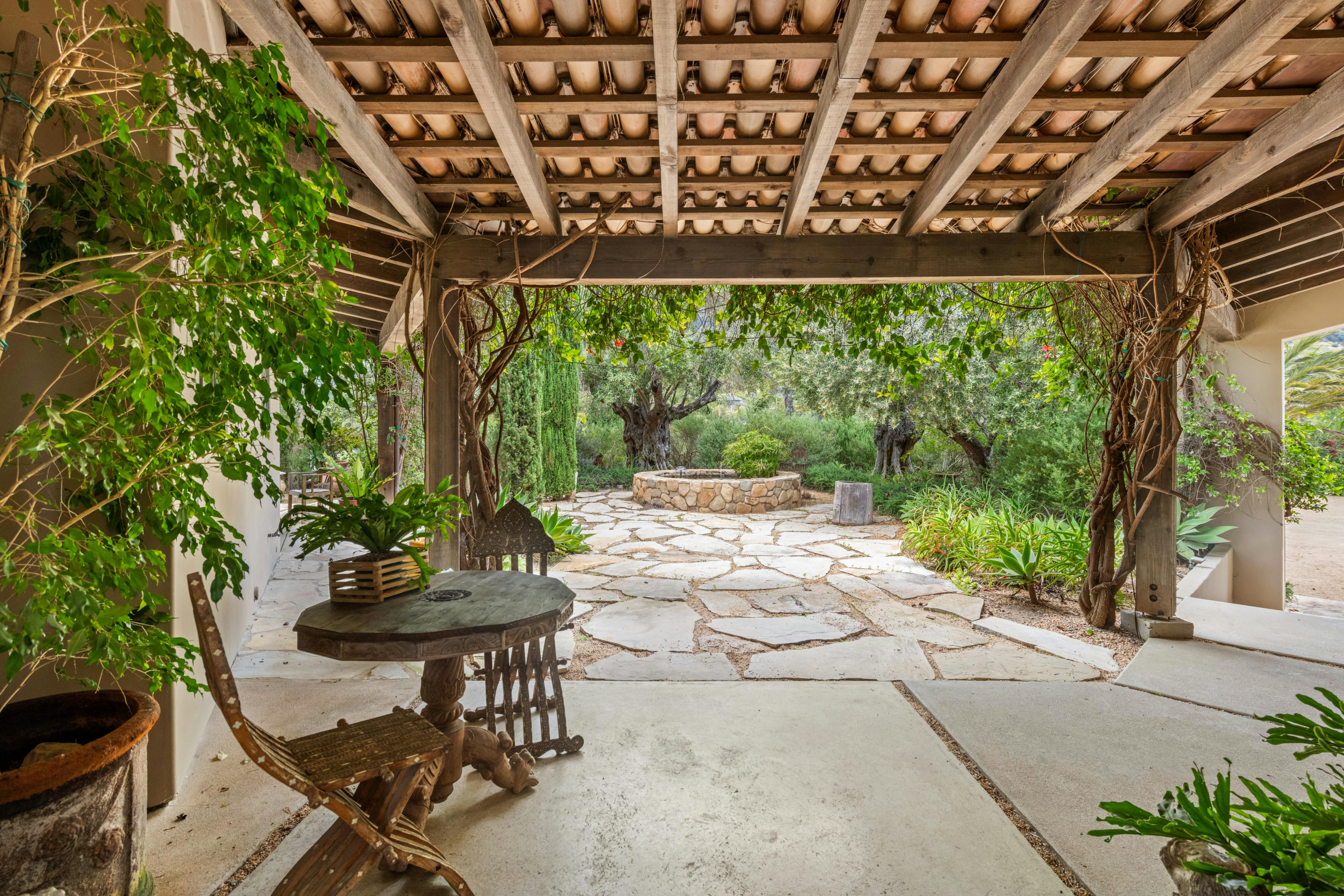
Small gardens in UK homes often end up feeling like leftover space rather than a room to enjoy. A narrow strip behind a terrace, a walled patch outside a townhouse, or a tight corner off the kitchen can feel cramped and unfinished, no matter how much you spend on plants or furniture. The French courtyard garden offers a way out. It is a style built around restraint, structure, and quiet elegance, and it suits compact British plots remarkably well.
Start With Structure, Not Plants
Most small gardens fail because they are planned around plants first and layout second. A French courtyard does the opposite. The bones come first: symmetry, clear sightlines, and zones that give the space a purpose. Even in a few square metres, matching planters on either side of a door, a central path, or a single axis running from the back door to a focal wall can transform how the area reads.
According to specialists from Elfords, structured landscaping plays a key role in how a small garden is perceived. Clean lines, defined zones, and well-placed hard surfaces can make a compact courtyard feel larger, more balanced, and easier to use throughout the year. A quick zoning sketch on paper, marking out a seating area, a planting border, and a focal point, is often all it takes to see the layout clearly before any work begins.
Swap Lawn for Gravel or Stone
A small lawn rarely thrives and rarely looks tidy. Replacing it with pale gravel, reclaimed stone, or limestone setts gives the garden a clean base that works year-round. Cream or beige gravel is a classic Provençal choice and reflects light into shaded corners, which helps with the low light typical of walled UK gardens. Stone and gravel also drain well, need little upkeep, and create a softer footfall sound that lawns cannot offer.
Use Vertical Space to Add Depth
When floor space is limited, the walls do the heavy lifting. Trellises fixed to fences, climbing roses, star jasmine, and ivy all draw the eye upward and make the garden feel taller and more enclosed in a good way. A bare boundary wall is wasted space. Cover it with greenery, a piece of weathered timber trellis, or even a single well-placed climber, and the footprint suddenly feels less restrictive. This approach works particularly well alongside the brick walls and close-board fences found in most UK gardens.
Choose a Quiet Planting Palette
French courtyard planting is built on restraint. A muted palette of lavender, clipped boxwood, white hydrangeas, pale roses, and olive trees placed in large planter pots creates a cohesive look that reads as elegant rather than busy. The same principle of keeping things calm and uncluttered that works so well indoors applies just as neatly outside. Sticking to two or three plant types repeated across the space is more effective than a wide mix. If you want to add usefulness alongside beauty, a few terracotta pots of rosemary, thyme, and bay near the kitchen door give you a small potager (kitchen garden) without crowding the design.
Pick One Strong Focal Point
Small gardens suffer when too many features compete for attention. The French approach is to choose one anchor and let it lead. That might be a wrought iron bistro set tucked into a corner, an aged terracotta urn on a plinth, a small wall-mounted fountain for soft sound, or a mirror fixed to a wall to bounce light and double the sense of greenery. The same principles carry across to smaller-footprint properties where one well-chosen feature does more than three average ones.
Layer Light for Evening Use
Lighting is what turns a courtyard from a daytime spot into an all-evening one. Wall-mounted lanterns, a few simple sconces by the back door, and warm string lights threaded through a climber give a soft, layered glow. Avoid bright white floodlights. The aim is atmosphere, not visibility.
Bringing It Together
A French courtyard garden works because it treats a small space as a feature rather than a flaw. Get the structure right, choose a calm material base, lift the eye with vertical planting, keep the palette restrained, and pick one strong focal point. That kind of considered outdoor design also signals care to anyone walking through the door. The Home Owners Alliance notes that a well-kept garden is one of the features buyers weigh most when forming a first impression of a home, and a structured courtyard reads as deliberate rather than neglected. In a compact urban plot, that quiet sense of order does a lot of work.

